
|
Western Victoria has much to offer winelovers and nature lovers. The
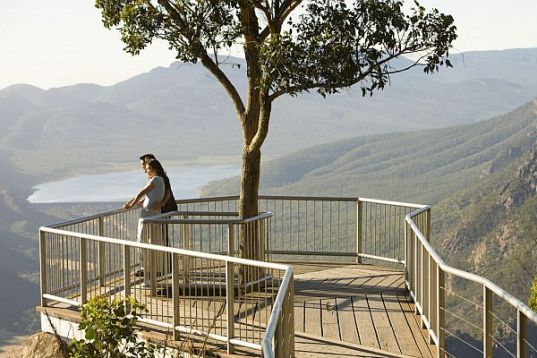
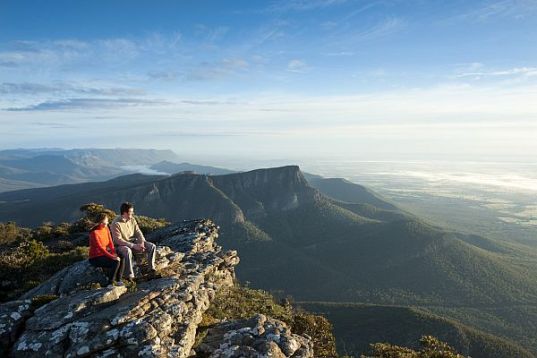
great natural attractions of The Grampians National Park draw both the
energetic, and the not so energetic, to witness its fabulous lofty vistas.
Even if camping and hiking are not on your agenda, it's too stunning to
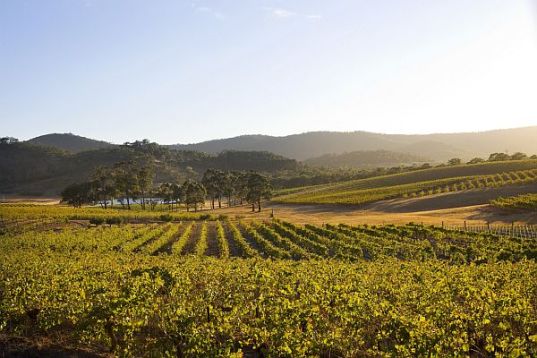
miss. But if your interests lean more to viticultural experiences, there
are two significant wine regions to explore, the pioneering Grampians
Wineries and the somewhat younger but exciting Wineries of the Pyrenees.
Gold discoveries first drew settlers to these areas, and consequently
the towns have a rich history that only just pre-dates the earliest vineyards.
The Central Goldfields Region effectively overlaps this area.
 |
The Pyrenees Wineries
Avoca, Moonambel and Redbank all have very highly regarded wineries
in the vicinity. Dalwhinnie, Taltarni, Mount Avoca and Blue Pyrenees
Estate are just a few of the higher profile vineyards. Warrenmang
Vineyard has developed a first class restaurant. In fact it's not
too hard to find gourmet food to accompany a bottle of local wine.
|
The Grampians Wineries
Two historically significant wineries Best's and Seppelt Great Western
have fascinating underground cellars. The latter offers guided tours (www.seppelt.com.au).
Great Western's name is widely synonymous with the champagne-style whites
it has produced for so long. There are now quite a number of relatively
newer wineries to visit in the same area. Almost all provide picnic areas
and some have BBQ facilities.
Many towns throughout the Western Region offer appealing Bed & Breakfast accommodation in beautifully restored historic houses and homesteads. Self-contained cabins, from luxurious to rustically simple, are also quite common around the Grampians. These are a popular choice for those who don’t fancy camping, but prefer the economy or independence of fending for themselves.
The Grampians National Park
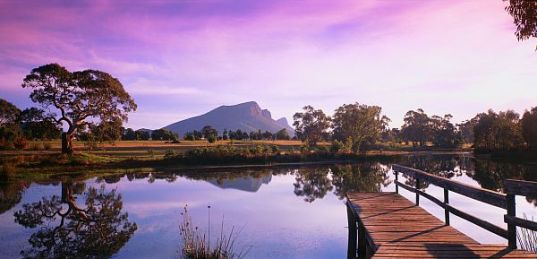
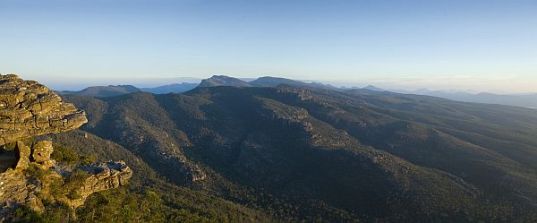
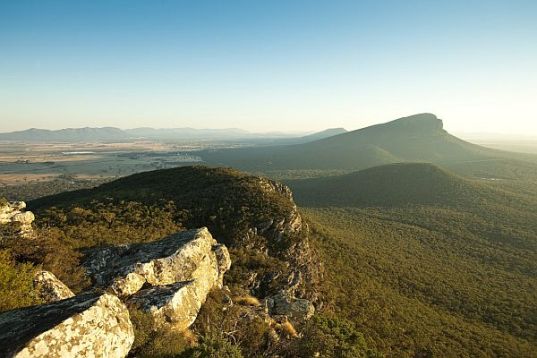
From the basalt plains of Western Victoria rise the majestic Grampians,
167,000 hectares of national park. Around 3.5 hours or 260km from Melbourne,
Halls Gap is the usual starting point for exploring the three sandstone
ranges. The ranges can also be approached from Dunkeld in the south, or
Horsham in the north, but all roads lead to Halls Gap.
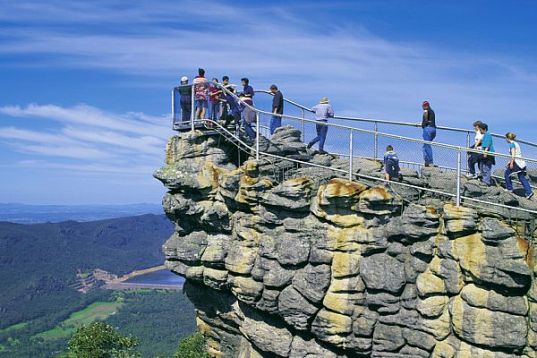
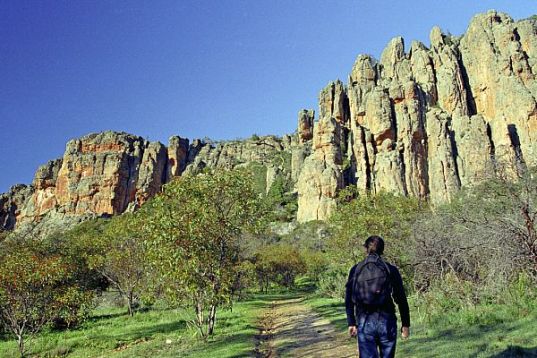
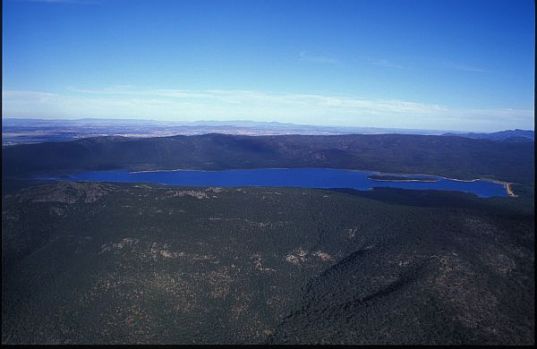
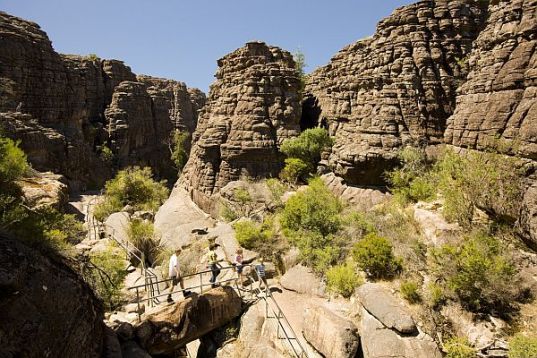
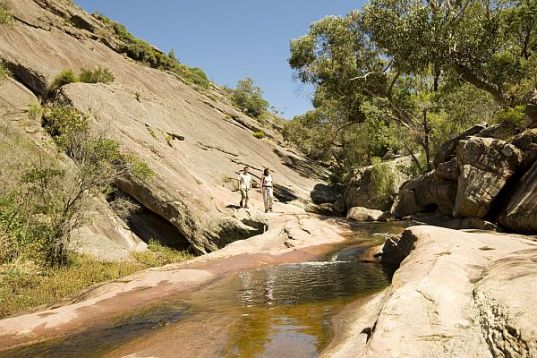
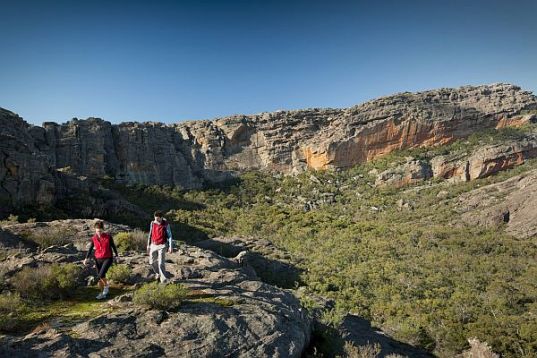
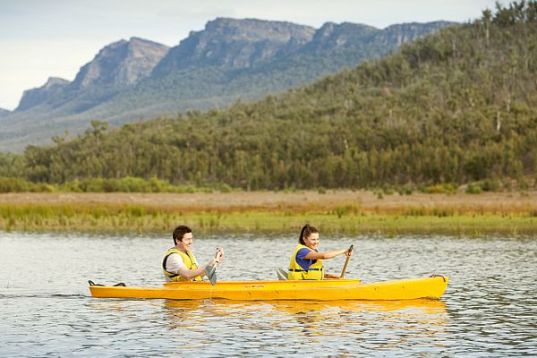
There are many extraordinary rock formations, lakes and lookouts to explore
through short casual walks to serious hikes. The Grand Canyon, Mushroom
Rock, the Balconies, Jaws of Death, the Pinnacle, the Chimney Pots - all
breathtaking to the senses. A true nature wonderland, wildflowers festoon
the landscape in spring. Kangaroos graze at Zumsteins picnic ground, Koalas
are seen around Halls Gap, and many birds and other wildlife are spotted
throughout the park.
|
Indigenous Heritage
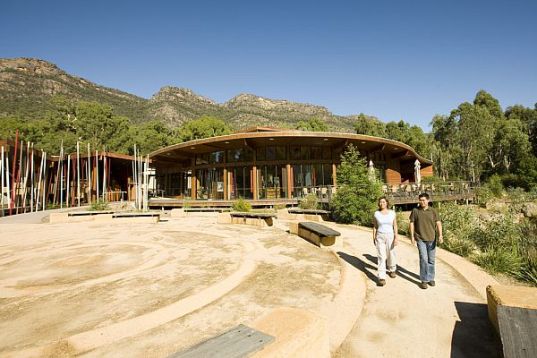
The informative Bambruk Cultural Centre in Halls Gap gives visitors
an insight into the area's aboriginal heritage and the rock paintings
hidden away in the mountains. The Manja Shelter – formerly known
as the Cave of Hands – is adorned with the work of the Jawardjali
people.
|
|
 |
| |
|
 |
The southern end of the Grampians has a geological link
with the volcanic plains stretching down to Warrnambool on the coast,
and the inland salt water lakes around Derrinallum and Colac. Not
quite so far afield are the Byaduk Caves, and Wallacedale Tunuli.
|
|