
|
The far North West corner of Victoria is characterised by vast, semi-arid,
mallee bushlands. Sunset country, Murray Outback, Mallee and Sunraysia
are all names by which this territory is known. Sunsets and sunrises are
almost never disappointing. The clear night skies are picture perfect
too. These are some of the attractions that bring visitors to this region
to enjoy warm outdoor holidays, when cooler weather across the rest of
Victoria limits outdoor pleasures.
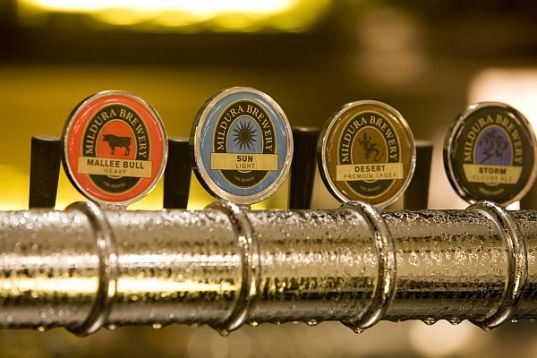
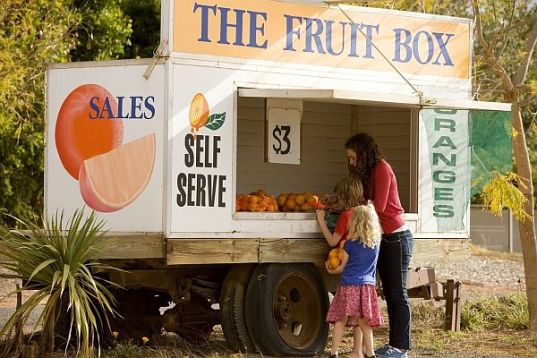
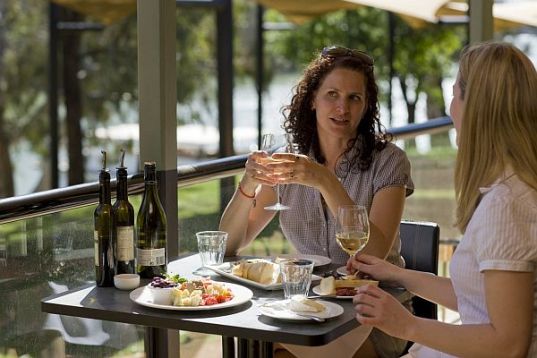
Along the great river Murray large scale irrigation changed the small riverside villages into substantial towns supporting the resulting lush farmlands. The warm mediterranean climate and the access to water has spawned a thriving horticultural industry, favouring citrus orchards, grape growing, melons, advocado and olive groves. Bountiful fresh produce is reflected in the multi-cultural culinary interests to be found in prominent towns such as Mildura. Respected wineries are another feature of the region. Trentham Estate, Lindeman’s Karadoc, Mildara Blass are a few of the well known names in the area. Dried fruit is also a major industry for the area.
Beyond the fertile plains you will find some inspiring and unique outback tracts now protected in extensive national parks. Across the Murray in ancient times mega-fauna roamed the area, and aborignal man lived and hunted there, before world climate changes turned it to desert. Excellent fossil remains and aboriginal artefacts reveal the area’s history long before white settlers arrived. Aboriginal descendents of the Yorta Yorta and Barkindji peoples of the area run tours and maintain cultural centres to give visitors an insight into their traditions and legends. Contemporary and traditional aboriginal art is also showcased in a number galleries in the region.
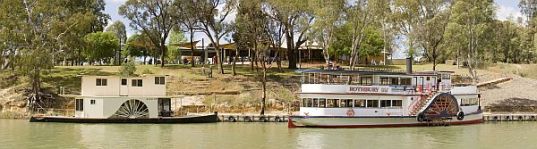
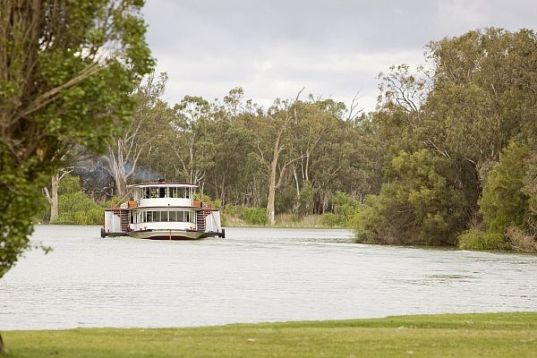
In more recent history, but still prior to the introduction of irrigation, the Murray River was a major conduit for trade, and restored or replica paddlesteamers are now part of the smorgasboard of experiences for visitors to the area.
The regions main towns of Mildura and Swan Hill are located along the Murray river, which delineates the border to New South Wales. Other sizeable towns include Ouyen, Red Cliffs, Robinvale and Sea Lake.
Mildura
On the banks of the Murray, not far from the intersection with the Darling
River, Mildura is quite the cosmopolitan centre. The town prides itself
on its arts, great food and wine, and outdoor leisure culture. Mildura
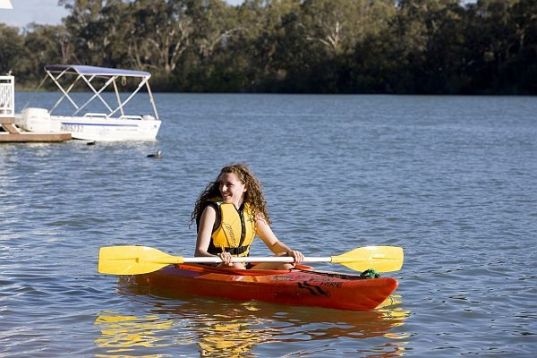
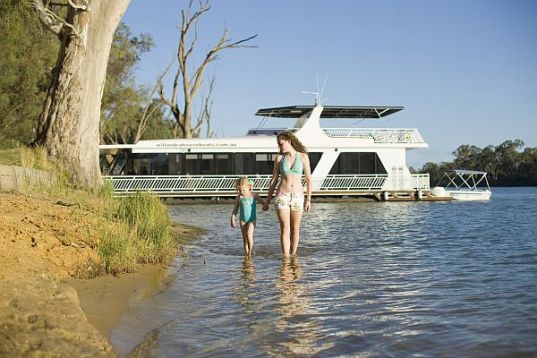
is known as a golfers paradise. Houseboat holidays are extemely popular
with families who want to make the most of the river.
About 15km East of Mildura at Trentham Cliffs is the well known Trentham
Estate winery - an excellent spot for lunch. Nearby Linsley
House is one of the best know B&Bs of the area with a beautiful
garden setting on the banks of the Murray River.
Swan Hill
Swan Hill was named after the noisy black swans found in the area. A
key attraction at Swan Hill is the Pioneer Selttlement. This is a three
hectare open air museum, demonstrating routine activities of riverland
pioneers such as; blacksmithing, baking, printing, chaff-cutting. The
buildings have replicated the construction methods and the materials typically
employed at the time. Nighttime sound and light tours are well worth catching.
Interesting homesteads in the area include Tyntyndyer and Murray Downs.
The National Parks
These parks are best visited in the cooler months of the year, when the
conditions are very pleasant for exploring. After rains, or river flooding,
areas can burst into spectacular wildflower landscapes. In any case there
is considerable diversity and subtlety to be found in certain parts of
the overall dry mallee scrublands.
Murray-Sunset National Park
The second largest national Park in Victoria, Murray-Sunset National
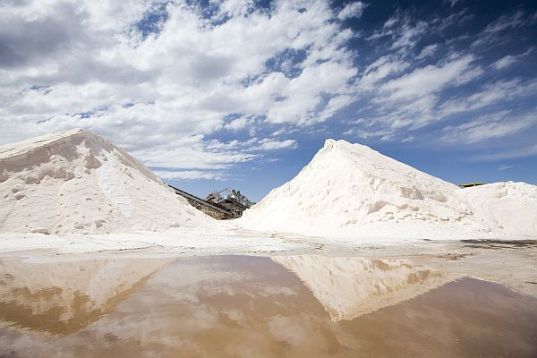
Park, has the unique Pink Lakes. Algae secretions in the salt lakes cause
a rosy tinge to the water body, offering a magical spectacle.
Hattah-Kulkyne National Park
The Hattah Lakes system in the Hattah-Kulkyne National Park contrasts
dramatically with the dry scrublands of much of the rest of the park.
The waterways and dry country are home to abundant birdlife, making this
park a birdwatcher’s dream and earning World Biosphere Reserve classification..
The strange Mallee Fowl can be found here. In Autumn the male lowan, or
mallee fowl, consructs a nesting mound of twigs and fallen leaves that
can be as much as 5 metres in diameter and 1.5 metres high. Flooding generally
occurs every couple of years, however the lakes can remain full for up
to ten years without flooding. The Park abutts the river and huge river
red gums grow along the sandy banks of the river and lakes.
Mungo National Park, NSW
Mildura is also used as a base for venturing into New South Wales to
a number of nearby parks of considerable significance. The most notable
is the world heritage listed Mungo National Park, 110kms north-east of
Mildura. The park’s desert landscape is dramatic and mysterious. Now a
seemingly lifeless panorama of craters, sand hills, strange eroded protrusions,
this same area in ancient times was the site of fresh water lakes. Fossil
evidence indicates giant fauna once lived there. The lakes and the abundant
animal and vegetable life supported early aboriginal communities. Winds
sweeping across the dry lake bed have sculpted the Mungo lunette (crescent
formation) where the “Great Walls of China” are seen – crags left standing
in the sandy expanse.
Also on the NSW side of the Murray, and sharing a past similar to Mungo,
are the striking russet red sand hills known as Perry Sandhills.
For more detailed information on the Victorian parks visit www.parkweb.vic.gov.au
Written by Cherryl Houben
Photos by Tijana
|